The short answer: mid-July to mid-August for the greatest number of flowers, accepting daily rain; late August and September for clearer skies, quieter trails and autumn colour with fewer blooms; June for snow patches, waterfalls and the first flowers without the full monsoon.
Opening and closing dates
The forest department normally opens the national park around 1 June, once the trail has been repaired after winter, and closes it in October — in recent years in the first days of the month, in some earlier years at the end of it. Hemkund Sahib follows its own calendar, usually opening in late May and closing around the second week of October. Both sets of dates are announced each year and can shift with the snow, so treat them as approximate until confirmed.
From roughly November to May the valley, Ghangaria and the trail are under snow and closed.
Month by month
| Month | Flowers | Weather | Crowds |
|---|---|---|---|
| June | Early bloomers on fresh green: primulas, anemones, marsh marigolds, irises, rhododendron on the slopes | Mild days, cold nights; pre-monsoon showers, rains arrive late in the month | Busy with Hemkund pilgrims; valley itself moderate |
| Early July | Bloom builds quickly: geraniums, potentillas, first balsam, blue poppy, cobra lily | Monsoon sets in; rain most days | Moderate |
| Mid-July – mid-August | Peak: the widest variety, pink balsam carpets, bellflowers, asters; Brahma Kamal near Hemkund | Wettest period; cloud, drizzle and heavy bursts; landslide risk highest | Highest, especially weekends and around 15 August |
| Late August | Still plenty in flower, balsam dominant; first seed heads | Rain easing slowly; some bright mornings | Moderate |
| September | Fewer flowers; grasses turn gold and russet; berries and seed heads | Clearer skies, crisp air, best mountain views; cold nights | Low |
| Early October | Autumn colours, very few flowers | Dry and cold; first snow possible | Very low; park closes |
June: snow, water and first flowers
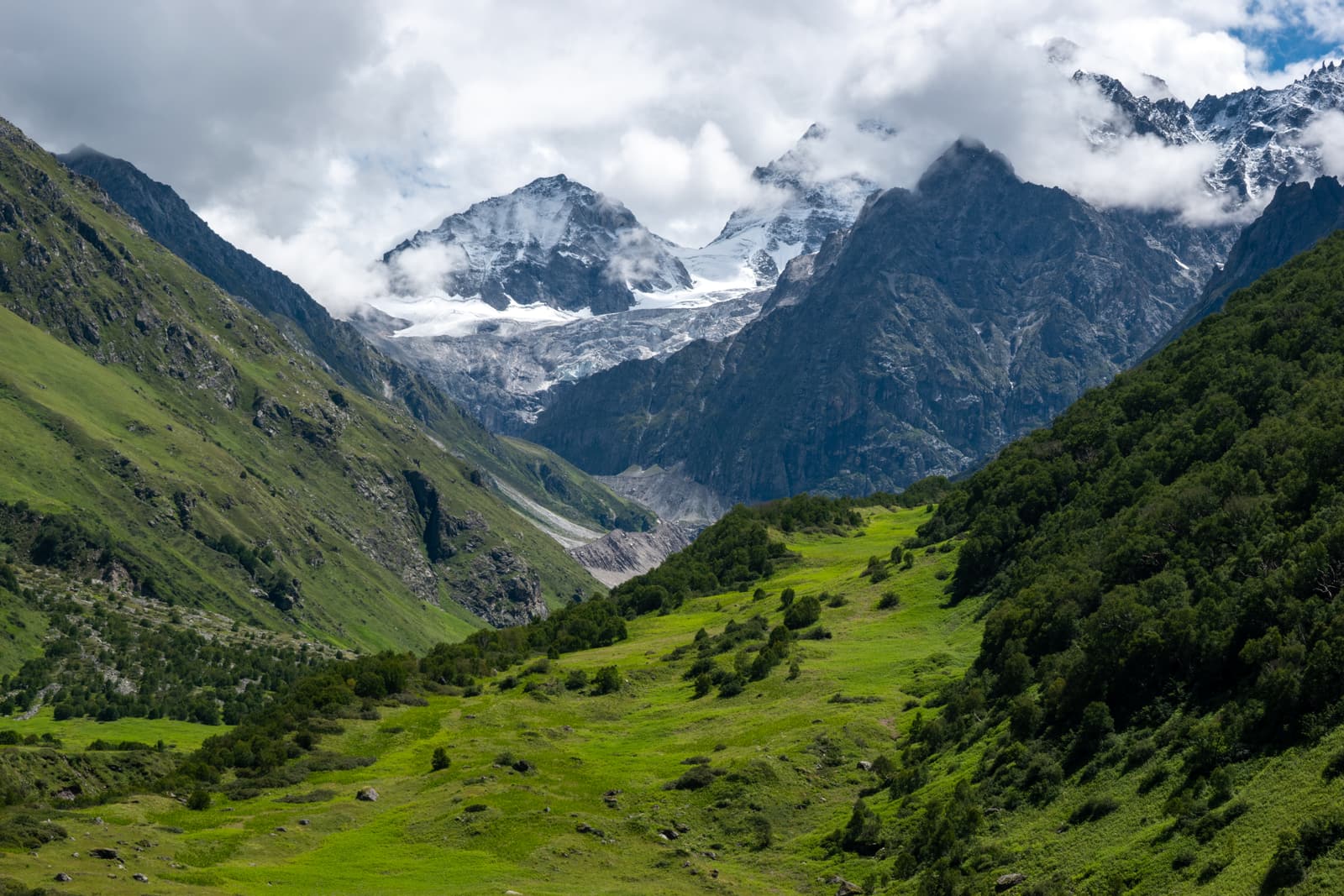
When the gate opens, tongues of old snow still lie across the path and the side streams run full. The meadows are a vivid new green, dotted with the first primulas, anemones and marsh marigolds, and rhododendron may still be flowering on the slopes. You will not see the carpets of colour in the photographs, but you get waterfalls at full strength, comfortable temperatures and, for most of the month, only passing showers. June is also the height of the Hemkund Sahib pilgrimage, so the trail to Ghangaria is lively.
July to mid-August: the peak
This is what the valley is famous for. New species open every few days, and by late July the floor of the valley is a patchwork of pink, white, yellow, blue and purple. The Himalayan blue poppy and the cobra lily are in flower, and the Brahma Kamal blooms on the high slopes below Hemkund Sahib.
The price is the monsoon at its strongest. Expect to walk in rain or mist for part of every day, to have mountain views only in snatches, and to face a real chance of a landslide delay on the highway. Come with good waterproofs and a spare day and you will not mind.
Late August and September: clearing skies
As the rains ease, the balsam keeps the valley pink for a while, then the grasses and leaves turn gold and red. The flower count drops week by week, but the air clears, the peaks come out and the trail empties. Photographers who care more about landscape than close-ups often prefer September. Nights at Ghangaria become properly cold.
Which flowers when
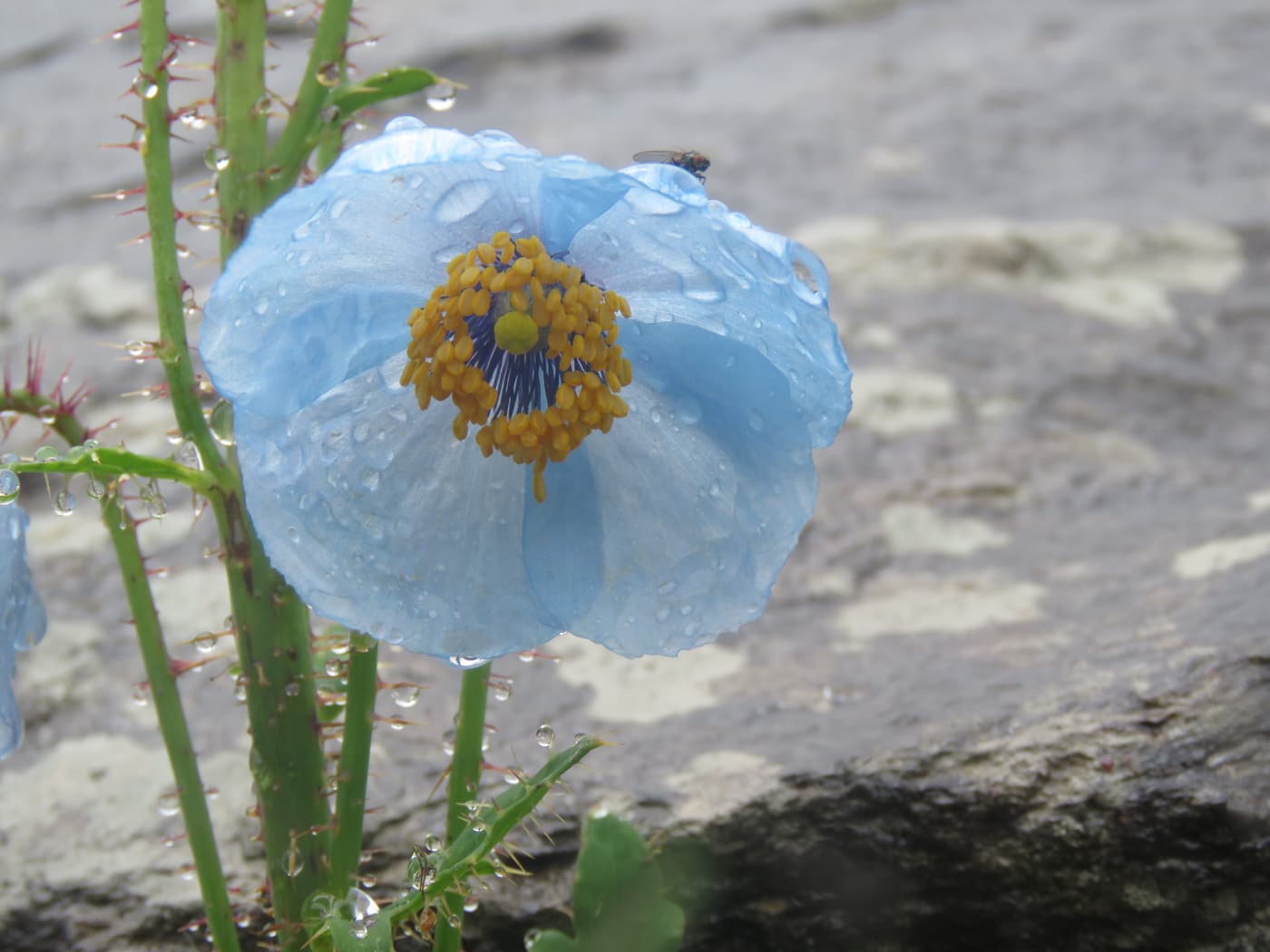
- Blue poppy (Meconopsis aculeata): roughly late June to August, among rocks and on shaded banks.
- Cobra lily (Arisaema): June and July, in damp forest on the way up and in the lower valley.
- Brahma Kamal (Saussurea obvallata): July and August, above about 4,000 m — look on the upper Hemkund trail.
- Himalayan balsam (Impatiens sulcata): late July to early September, in great pink drifts.
- Primulas, anemones and marsh marigolds: June and early July, close behind the melting snow.
- Geraniums, potentillas, bellflowers and asters: July and August.
Flowering shifts by a week or two from year to year depending on the winter’s snow and the arrival of the monsoon, so nobody can promise a particular flower on a particular date.
Weather and temperatures
At Ghangaria, summer days are cool — think roughly 10 to 20 °C — and nights can fall to single figures; at Hemkund Sahib it is colder still and can approach freezing early and late in the season. Rain is the constant. Mornings are usually the driest part of the day, which is one more reason to start early.
Dates to avoid or plan around
- Weekends in late July and August and the days around Independence Day (15 August) are the busiest in the valley; book rooms ahead.
- June brings the largest numbers of Hemkund Sahib pilgrims to Ghangaria.
- The Kanwar Yatra, usually in July or early August, crowds Haridwar and Rishikesh and can disrupt road traffic on the plains. Check the dates and consider arriving by train or by air into Dehradun.
Our recommendation
For a first visit with flowers as the priority, aim for the last week of July or the first two weeks of August, travel midweek and keep a buffer day. If you would rather trade some flowers for dry feet and mountain views, choose the first half of September. Then pick a trek and read the trek guide.