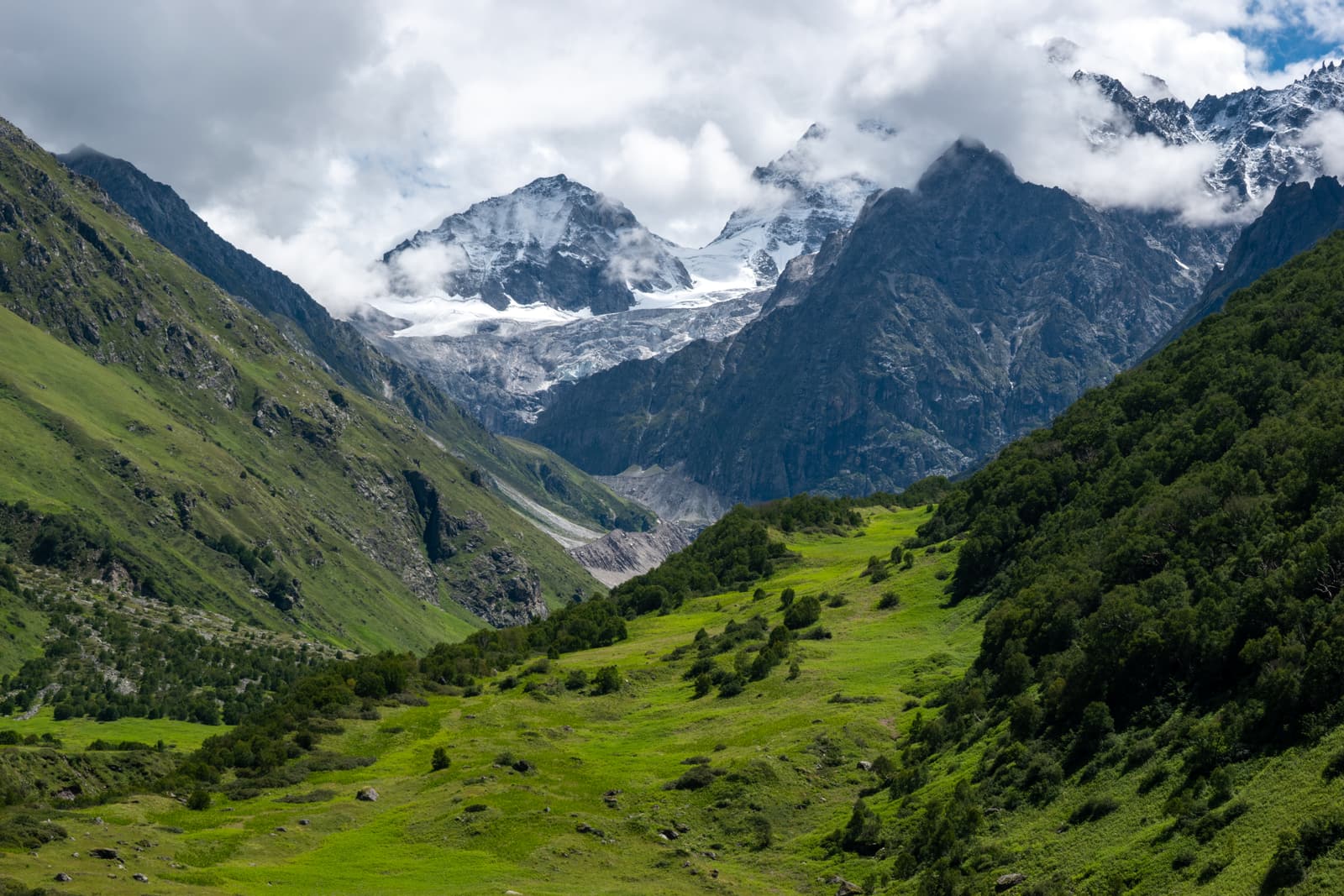
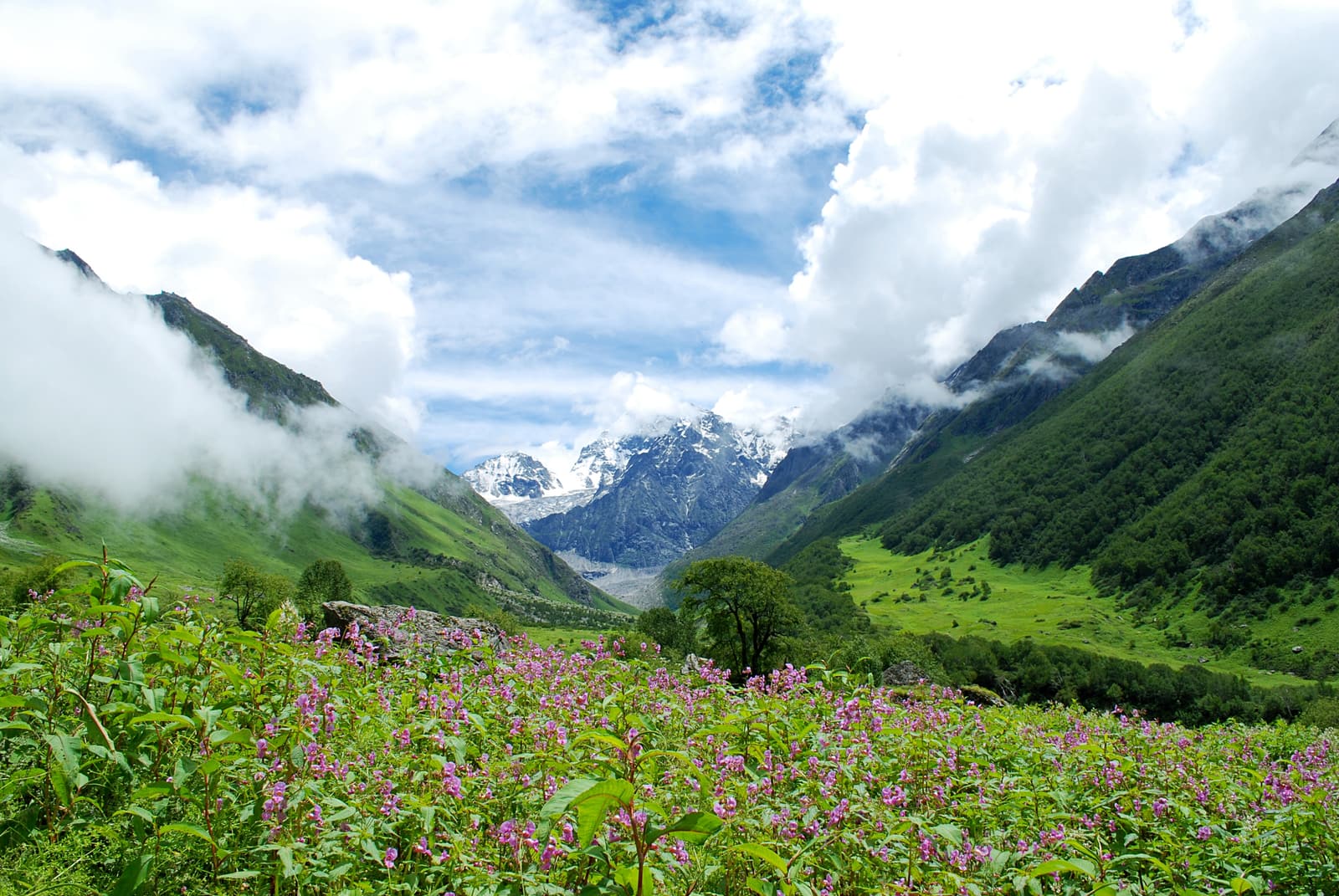
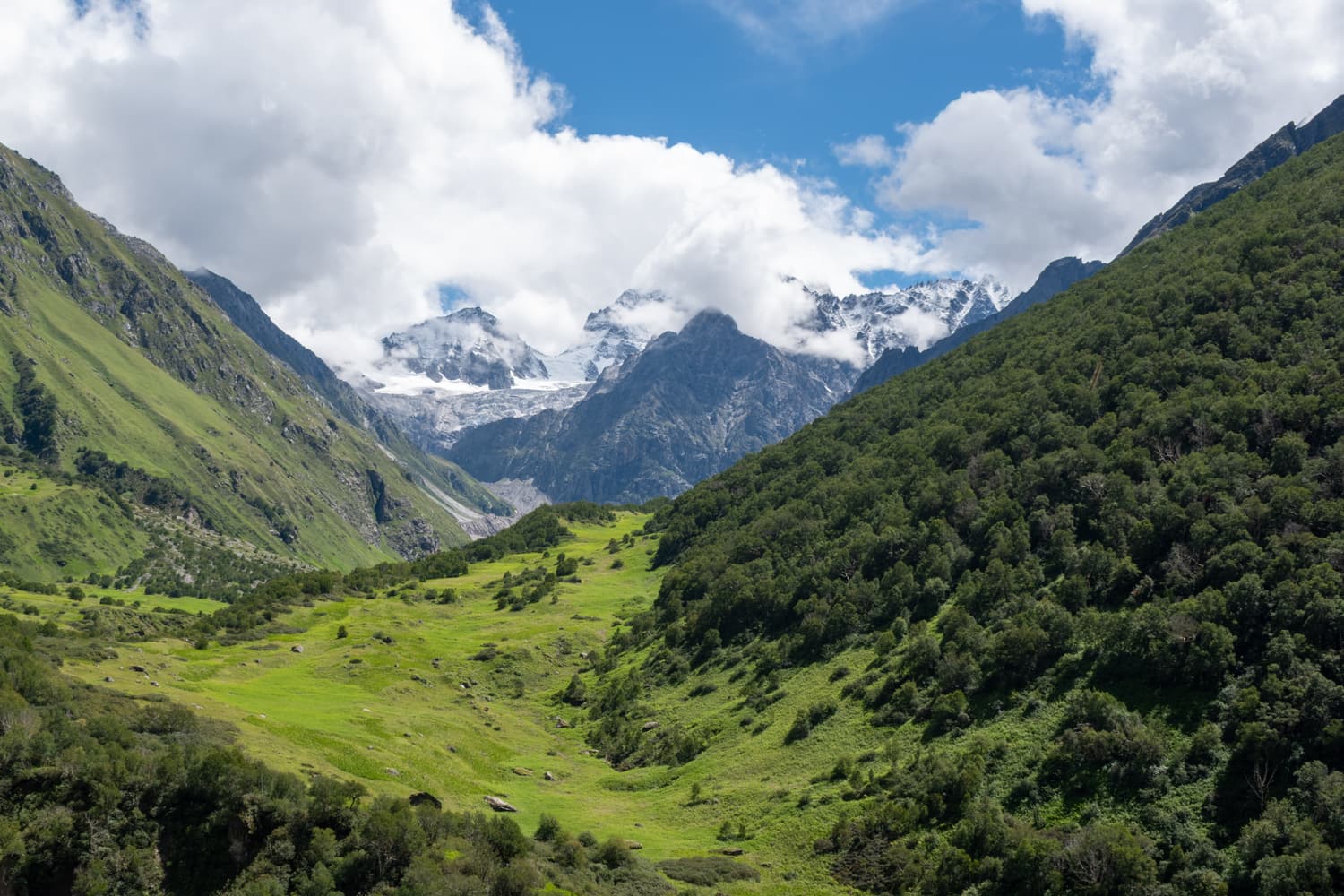
The Valley of Flowers National Park is a hanging glacial valley in the Chamoli district of Uttarakhand, drained by the Pushpawati river and walled in by peaks such as Rataban and Gauri Parbat. The valley floor lies at roughly 3,300 to 3,700 metres and runs for about eight kilometres; the park as a whole covers around 87 square kilometres. For most of the year it is buried in snow. Then, for a few weeks of monsoon, it becomes one of the richest natural flower gardens in the Himalaya, with several hundred species of flowering plants recorded.
Local shepherds knew it as the Bhyundar valley long before the outside world did. It became famous after the British mountaineers Frank Smythe, Eric Shipton and R. L. Holdsworth wandered into it in 1931 on their way back from Kamet; Smythe returned and published The Valley of Flowers in 1938. It was declared a national park in 1982 and, in 2005, added to the UNESCO World Heritage list together with Nanda Devi National Park. Both lie within the Nanda Devi Biosphere Reserve.
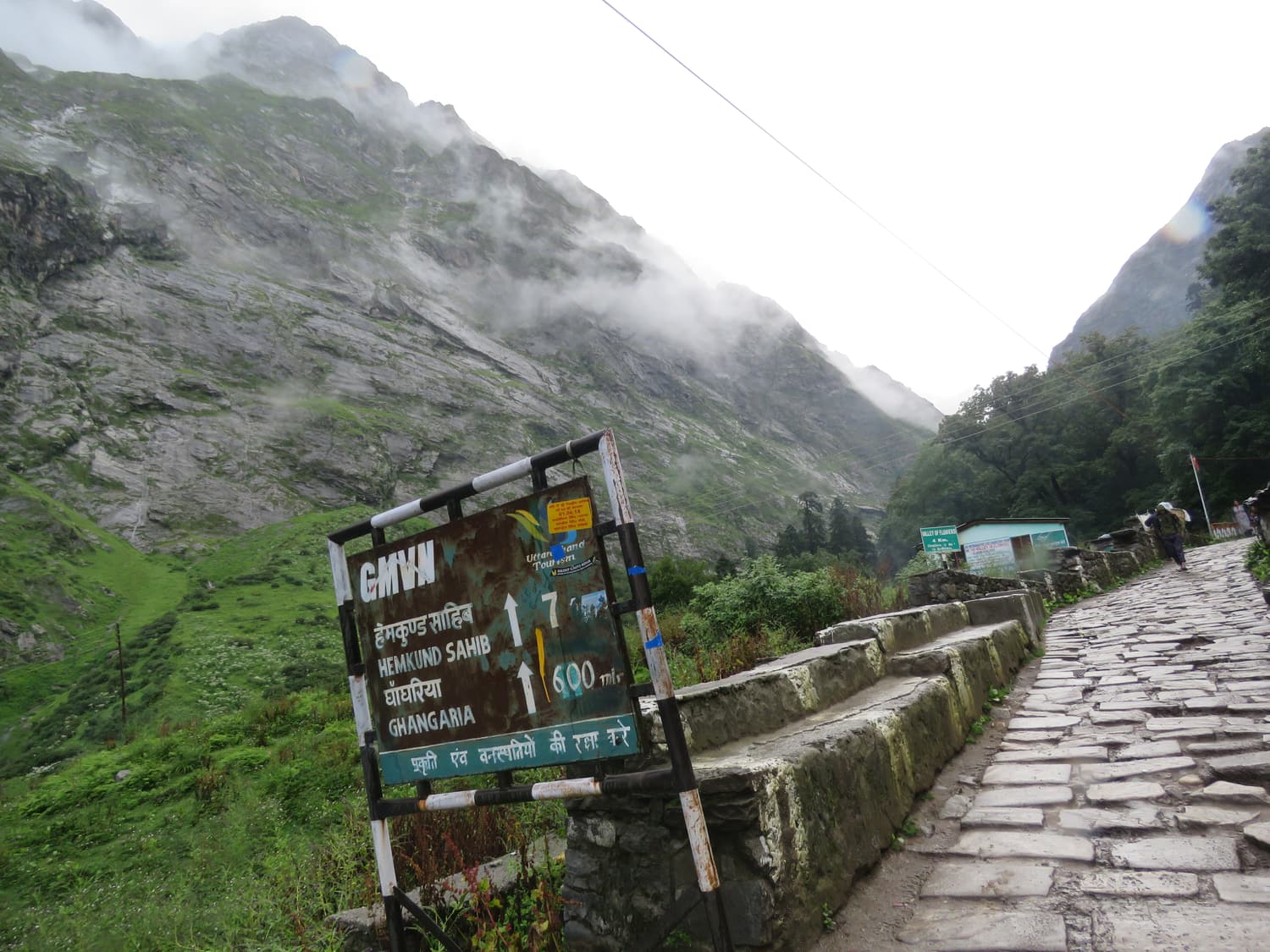
It is a place you visit on foot, for the day. There is no road, no lodging and no camping inside the park: everyone walks in from Ghangaria in the morning and is back by late afternoon.
What to see and do at Valley of Flowers National Park
Walk in through the gorge
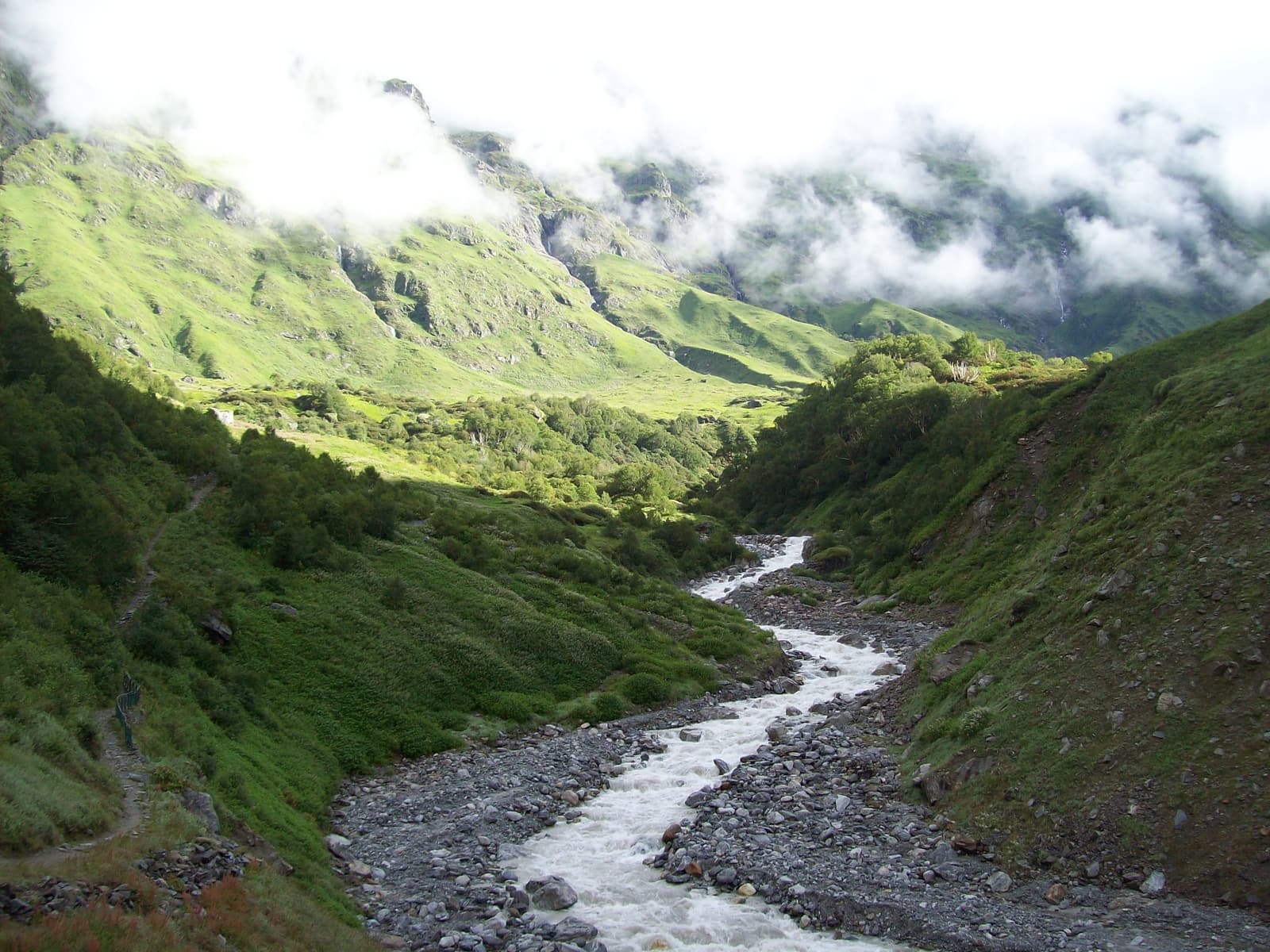
From Ghangaria the path forks left, passes the forest check post where you buy your entry ticket, crosses a bridge over the Pushpawati and climbs through a narrow, forested gorge. After roughly three to four kilometres the walls fall back and the valley opens in front of you. This first stretch is the steepest part of the day; take it slowly and you will have energy left for the meadows.
Follow the trail through the meadows
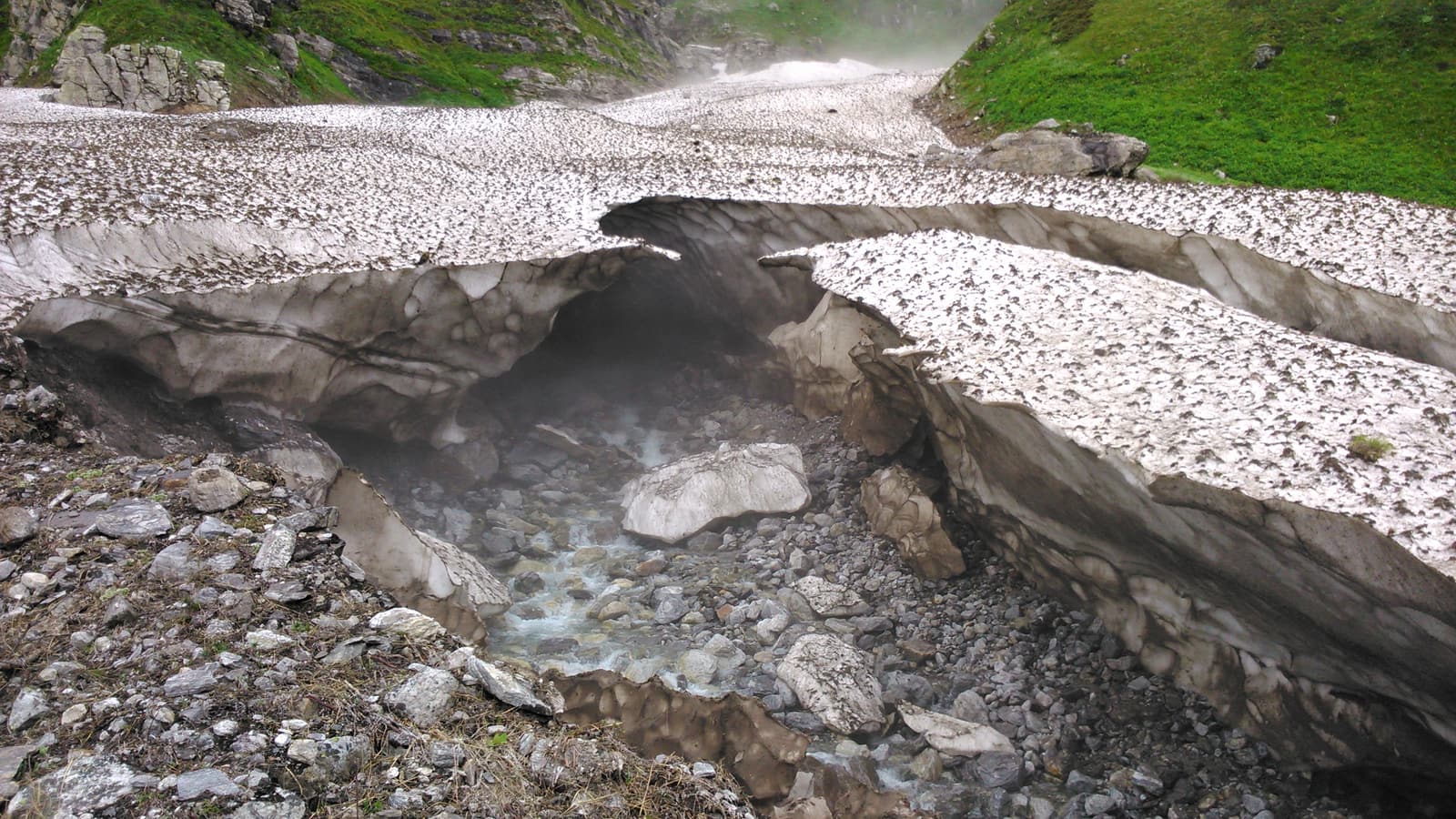
A single stone-flagged path leads up the valley through waist-high flowers, crossing side streams on small bridges and, early in the season, the remains of snow bridges. How far you go is up to you and the clock — many visitors turn around after two or three kilometres of the valley floor, which is enough to see its range of colour. Stay on the path: the meadows are fragile and the park rules require it.
Find Joan Margaret Legge’s grave
In 1939 the botanist Joan Margaret Legge, sent by the Royal Botanic Gardens at Kew to study the valley’s plants, slipped while collecting specimens and died here. Her sister later placed a memorial stone, inscribed with a line from the Psalms: “I will lift up mine eyes unto the hills, from whence cometh my help.” The grave lies a few kilometres into the valley, signposted off the main trail, and makes a natural goal for the day.
Learn to recognise the flowers
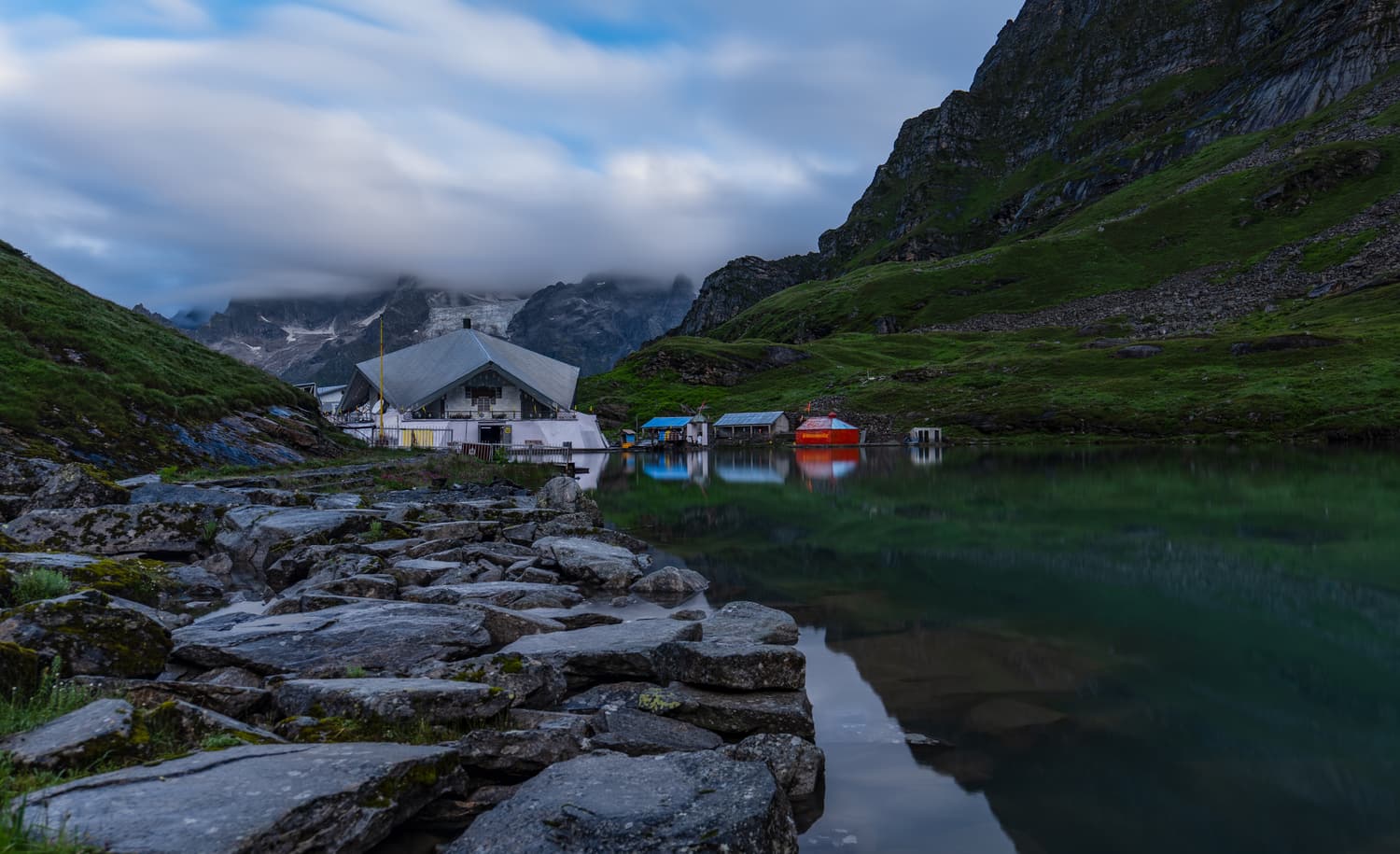
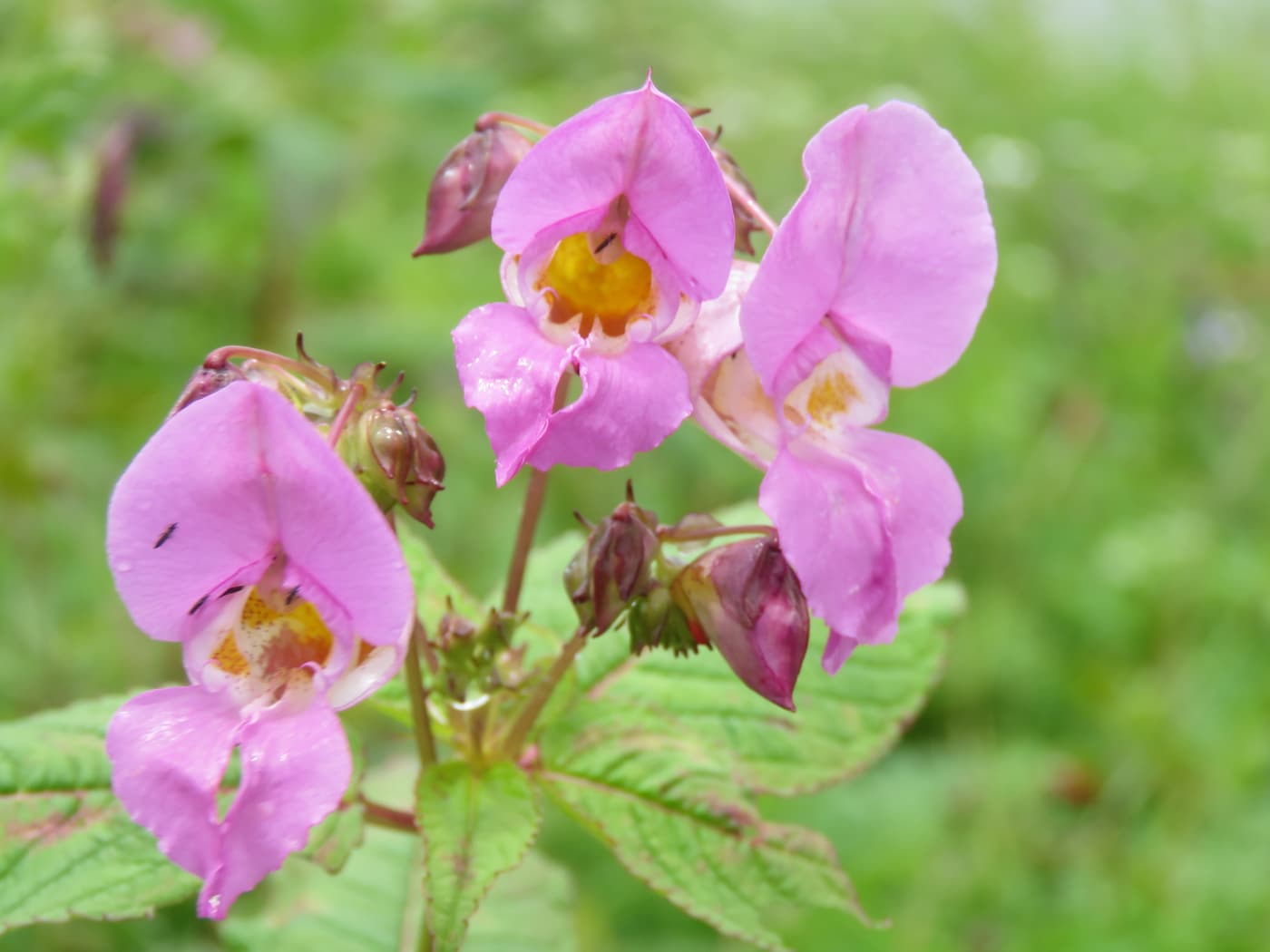
The valley changes week by week. Expect primulas, anemones and marsh marigolds soon after the snow melts; geraniums, potentillas and the first Himalayan balsam in early July; and sheets of pink balsam, bellflowers, asters and louseworts at the peak from mid-July to mid-August. The blue poppy grows in rocky places, the hooded cobra lily in damp forest, and the sacred Brahma Kamal mostly higher up, on the trail to Hemkund Sahib. Our month-by-month guide has more.
Watch for wildlife
The park shelters Asiatic black bear, musk deer, blue sheep, Himalayan tahr, red fox and, rarely seen, snow leopard. Day visitors are far more likely to meet pikas among the boulders and birds such as the Himalayan monal, the iridescent pheasant that is the state bird of Uttarakhand. Go quietly and start early for the best chance.
How to get to Valley of Flowers National Park
- From Ghangaria: the park gate is a short walk from the village; the valley proper begins about three to four kilometres further on. Allow six to eight hours for the round trip, including time among the flowers.
- Entry: tickets are sold at the forest check post near Ghangaria. The gate normally opens around 7 am, entry stops around midday to early afternoon and everyone must be out by about 5 pm. The fee is modest for Indian citizens and higher for foreign nationals, and has traditionally been valid for three days. Times and fees change — confirm at the gate or with your lodge.
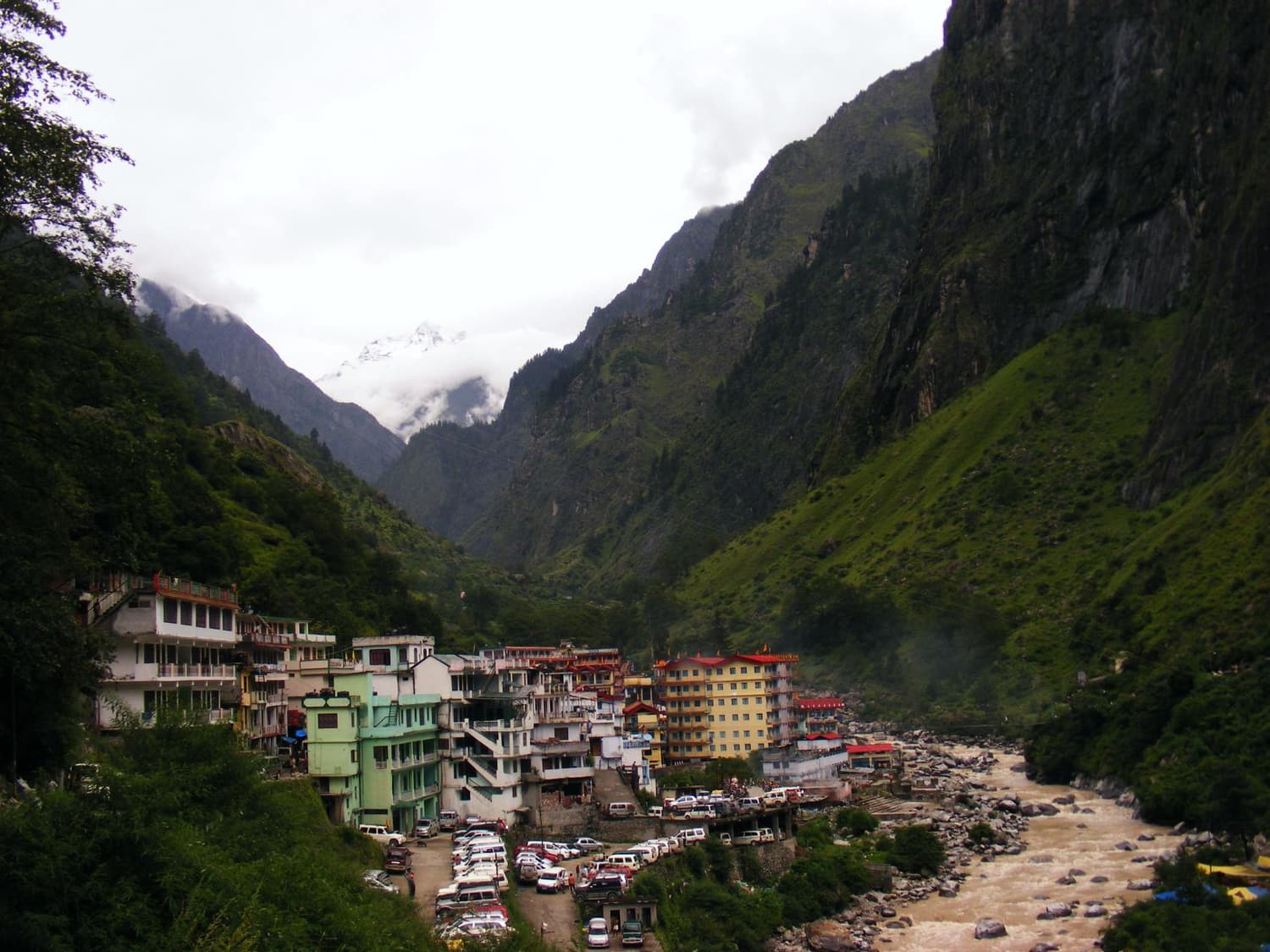
- Getting to Ghangaria: drive to Govindghat, take a shared jeep to Pulna and walk, ride a mule or — weather permitting — fly by helicopter. See getting here.
- No mules inside the park: pack animals are not allowed beyond the check post. Porters who carry visitors in a basket chair can be hired in Ghangaria if walking is difficult.
Practical tips
- Start as early as the gate allows. Cloud and rain usually build after midday, and the last-entry time is enforced.
- There is no food, shop or shelter inside the park. Carry a packed lunch, at least a litre of water and a rain jacket or poncho — and carry every wrapper back out.
- Do not pick flowers or leave the path. Collecting plants is prohibited in the national park.
- Good grip matters more than heavy boots: the stone path is slippery when wet, which in the monsoon is most of the time.
- Keep one spare day at Ghangaria if you can. If the valley is closed by heavy rain or a washed-out bridge, you can swap your days around.
Best treks & tours for Valley of Flowers National Park
These packages are the easiest way to see Valley of Flowers National Park with a guide, transport and lodging sorted:
 Private guided trek from US$498
Rishikesh: 5-Day Valley of Flowers Trek with Private Guide
The most complete Valley of Flowers package we found on GetYourGuide: five days from Rishikesh with a private guide, the drive up the pilgrim highway, the walk in to Ghangaria and a day among the flowers. The listing is new and has no reviews yet, so read the day-by-day plan and what is included before you book.
- The drive up the Alaknanda past Devprayag and Joshimath
- Trek from Govindghat to Ghangaria with a private guide
- A full day inside the Valley of Flowers National Park
Guided tour from US$590 Haridwar: Valley of Flowers Guided 3-Day Tour
A fast guided trip from Haridwar that follows the classic road to Govindghat and on to the valley. Three days is a very tight schedule for a route that involves around ten hours of driving each way plus the trek, so check the itinerary carefully and keep a spare day in hand. No reviews yet.
- Pick-up in Haridwar, convenient for the railway station
- The road via Rishikesh, Devprayag, Rudraprayag and Joshimath to Govindghat
- A guided visit to the Valley of Flowers
 Guided tour from US$621
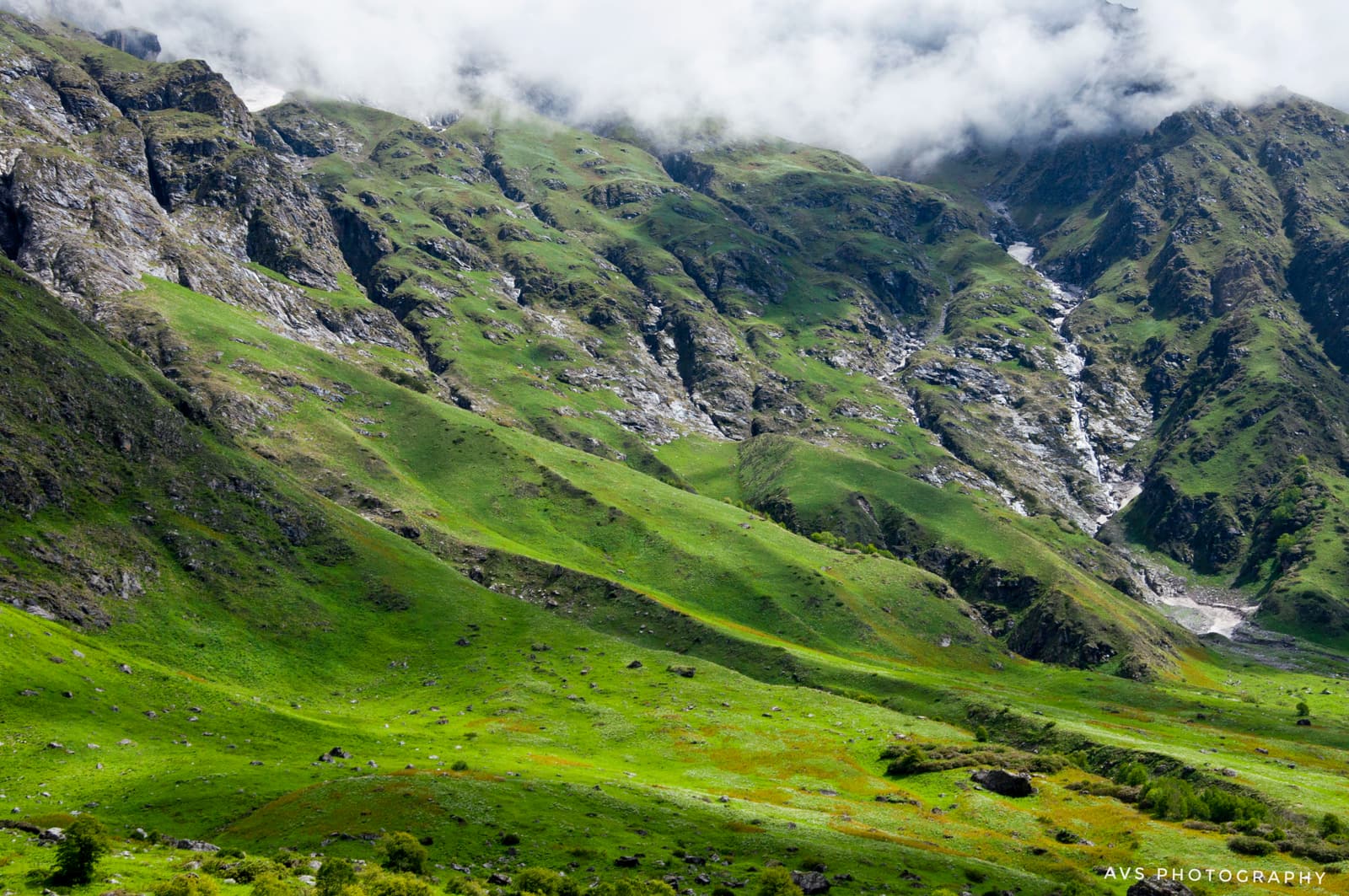
Haridwar: Valley of Flowers, Uttarakhand Guided 3-Day Tour
A sister product to the three-day Haridwar tour, listed separately on GetYourGuide at a slightly different price. Compare the inclusions of the two side by side — hotel category, meals and whether mule or helicopter costs are covered — and pick the one that fits. No reviews yet.
- A second three-day departure from Haridwar
- Alpine meadows, wildflowers and Himalayan scenery
- Guide and transport arranged for you
 Guided trek & pilgrimage from US$1800
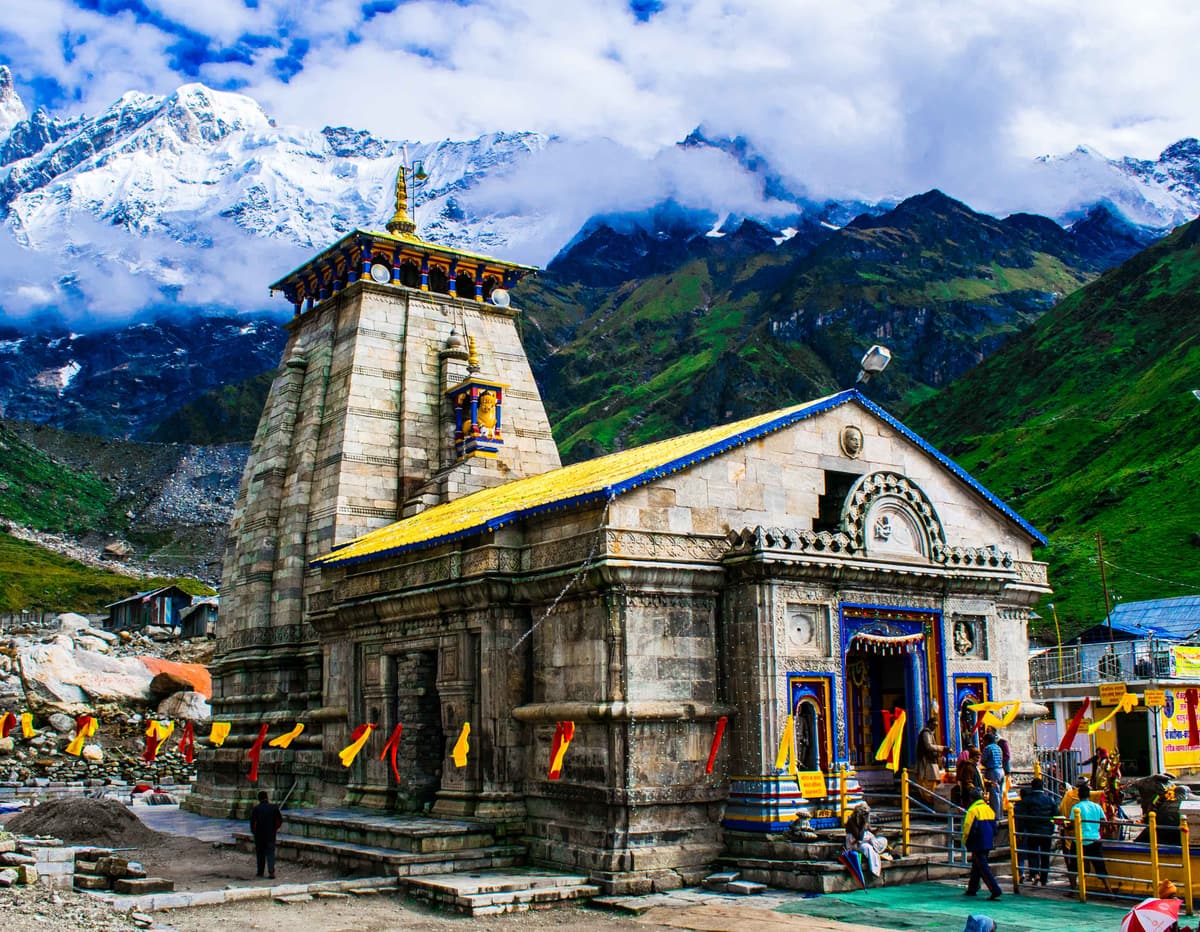
From Delhi: Kedarnath & Valley of Flowers 9-Day Trek
A long Garhwal journey from Delhi that pairs the pilgrimage trek to Kedarnath with the Valley of Flowers — two of the great walks of Uttarakhand in one trip. It is the most expensive option here and the listing has no reviews yet, so confirm group size, lodging and what the price covers.
- The trek to the Kedarnath temple
- The Valley of Flowers National Park
- Round trip from Delhi through Garhwal