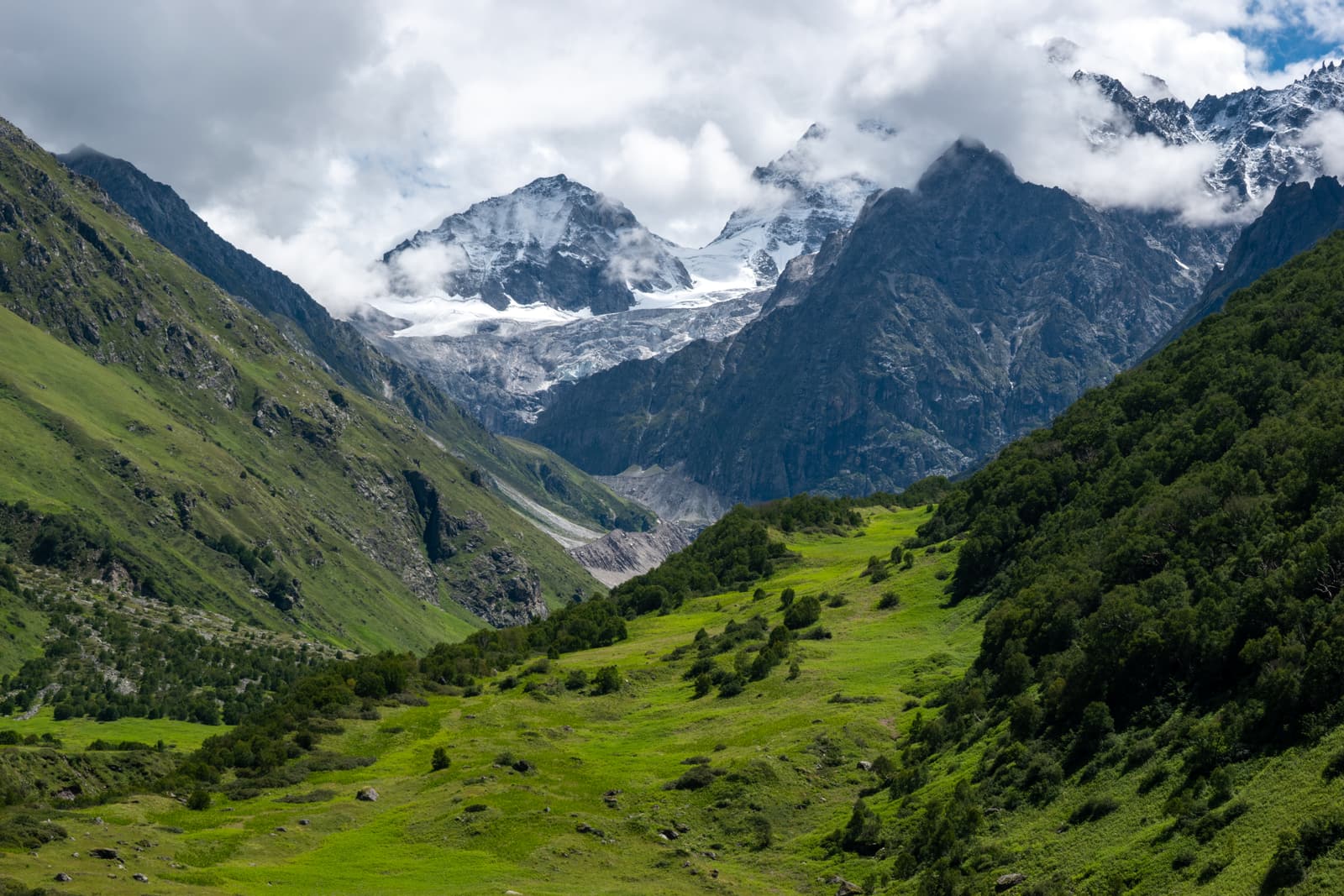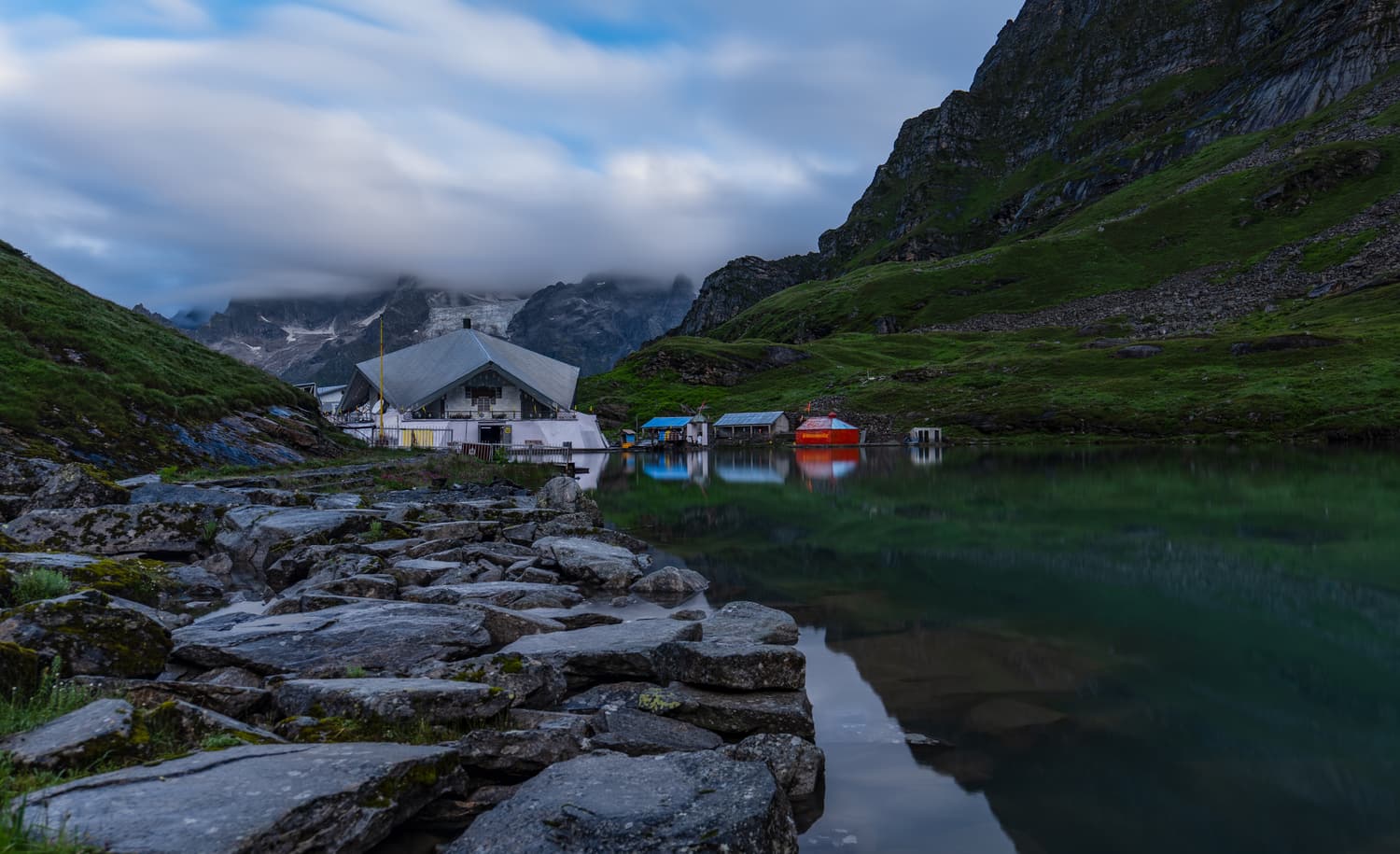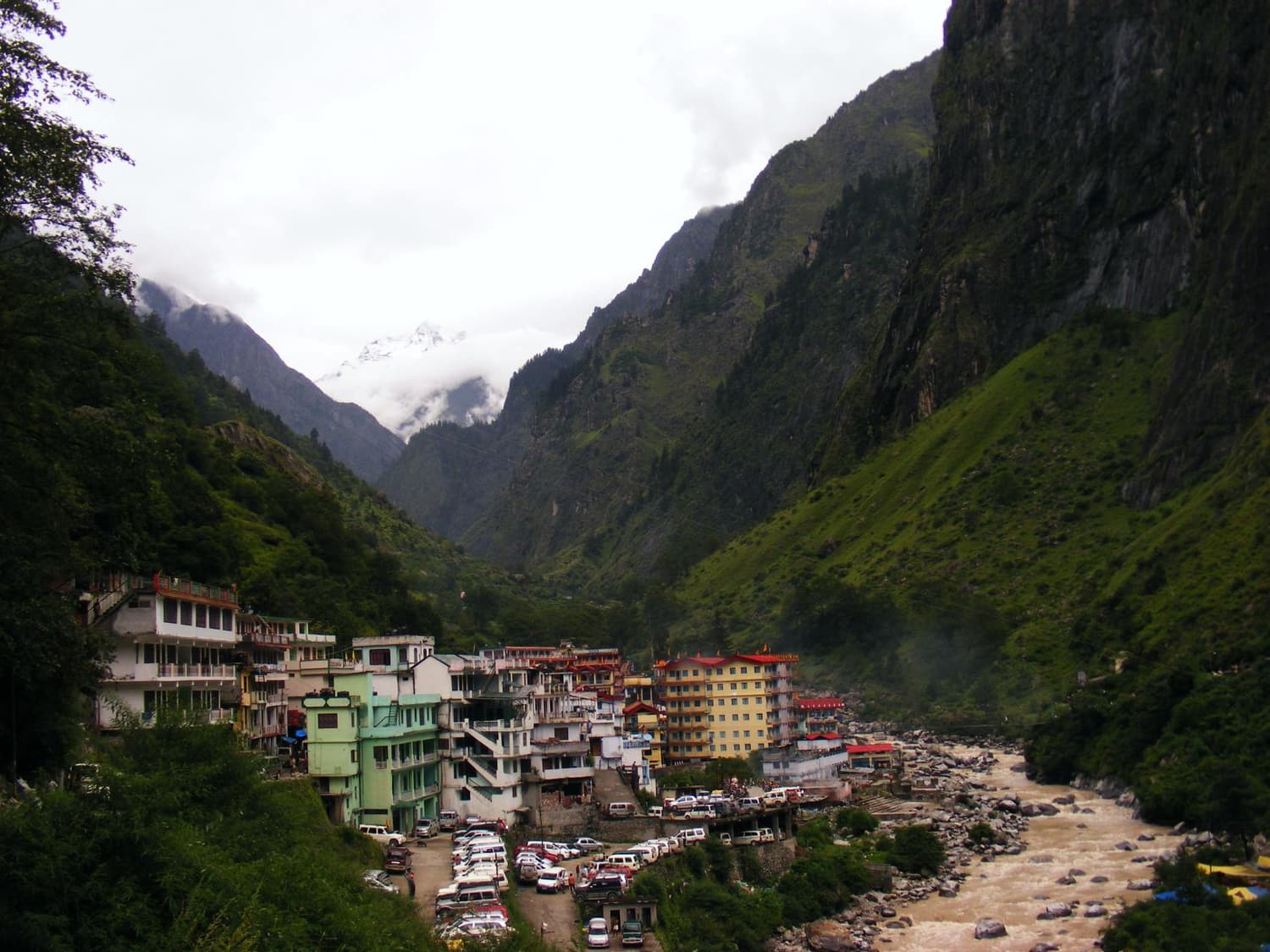
Ghangaria — also called Govind Dham — is a small seasonal settlement at around 3,050 metres, set in pine and fir forest where the Pushpawati and the stream from Hemkund join to form the Lakshman Ganga. It exists for trekkers and pilgrims: a single lane of lodges and dhabas, a big gurudwara, a helipad, a forest office and little else. In winter it is abandoned to the snow.
Everyone bound for the Valley of Flowers or Hemkund Sahib sleeps here, usually for two or three nights. It is simple, often damp and occasionally crowded, and after a day on the trail it feels like the most welcome place on earth.
What to see and do at Ghangaria
Rest and acclimatise
You have climbed from about 1,800 metres at Govindghat to over 3,000 in a day. An easy evening — a short stroll, plenty of fluids, an early night — is the best preparation for the two walks ahead.
Visit the gurudwara
The Ghangaria gurudwara offers shelter and free meals in its langar to pilgrims, and its evening prayers are open to all. It is the social heart of the village in the yatra season.
Find the flower interpretation centre
A small nature interpretation centre run with the forest department has, in past seasons, shown displays and a short film on the valley’s plants — a helpful primer before you walk in. Ask locally whether it is open.
Walk to the waterfall and helipad meadow
A few minutes below the village the forest opens into a meadow used as the helipad and by tented camps, with a waterfall on the cliff opposite. It is a pleasant leg-stretch when the afternoon rain clears.
How to get to Ghangaria
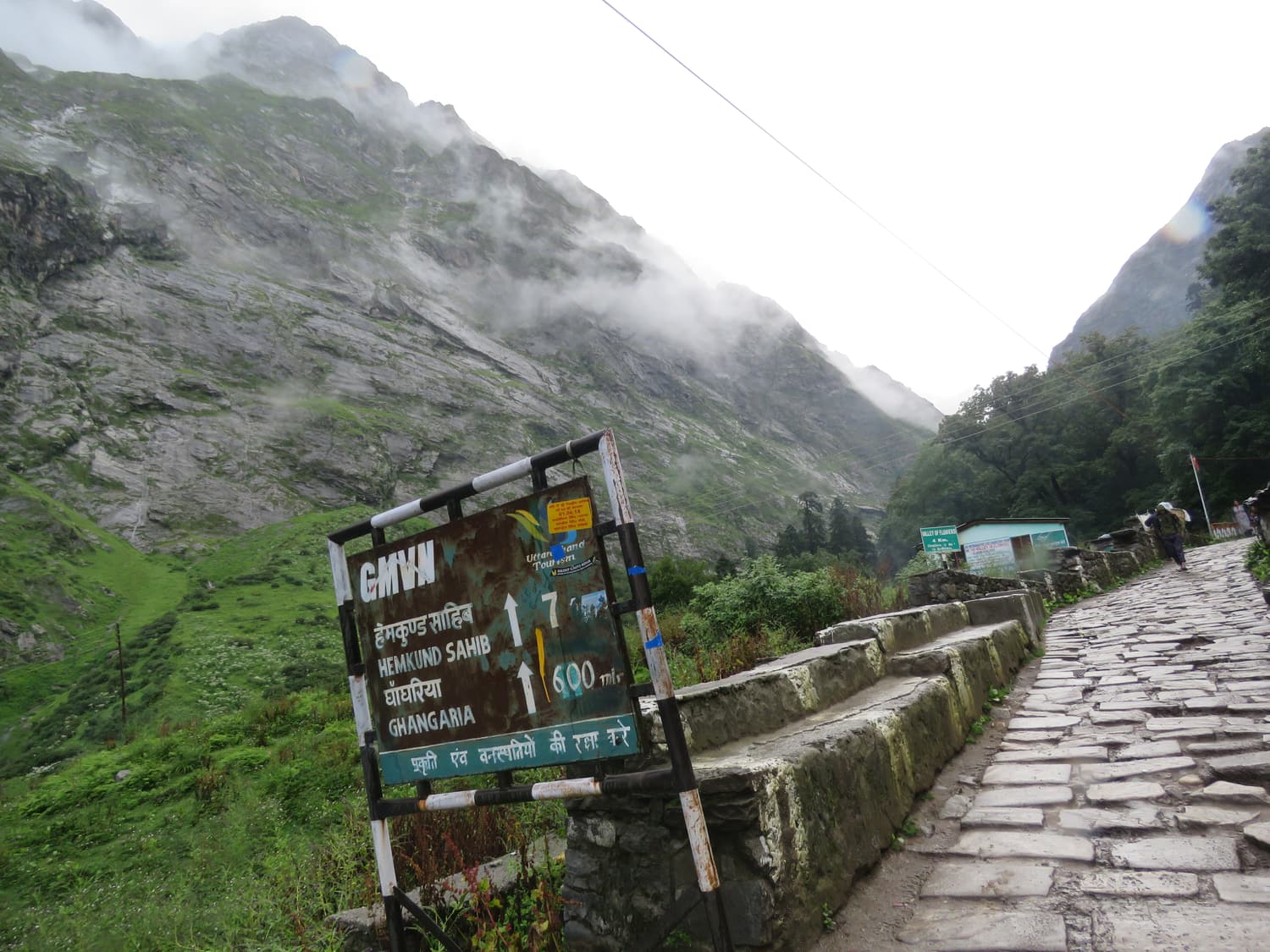
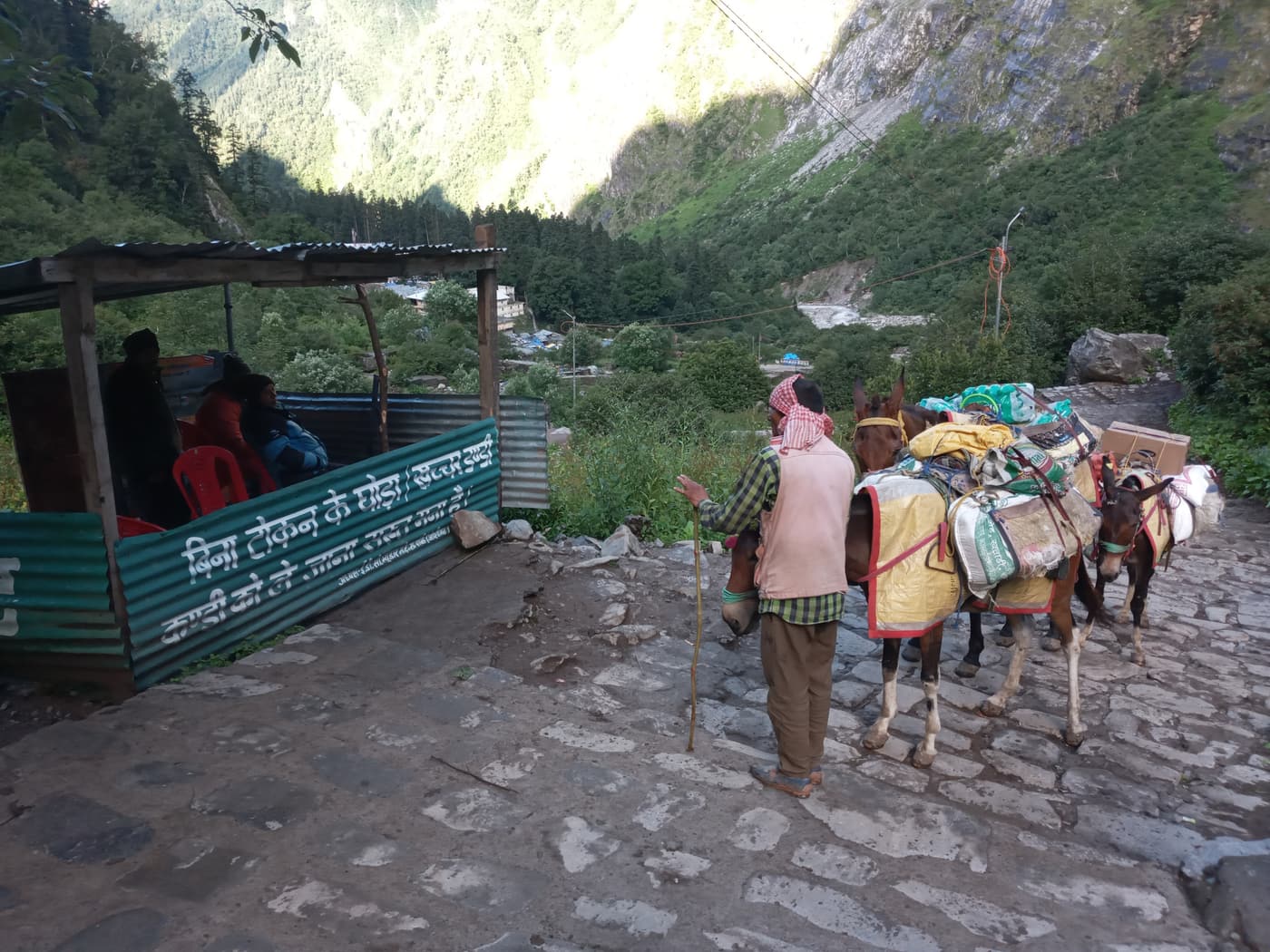
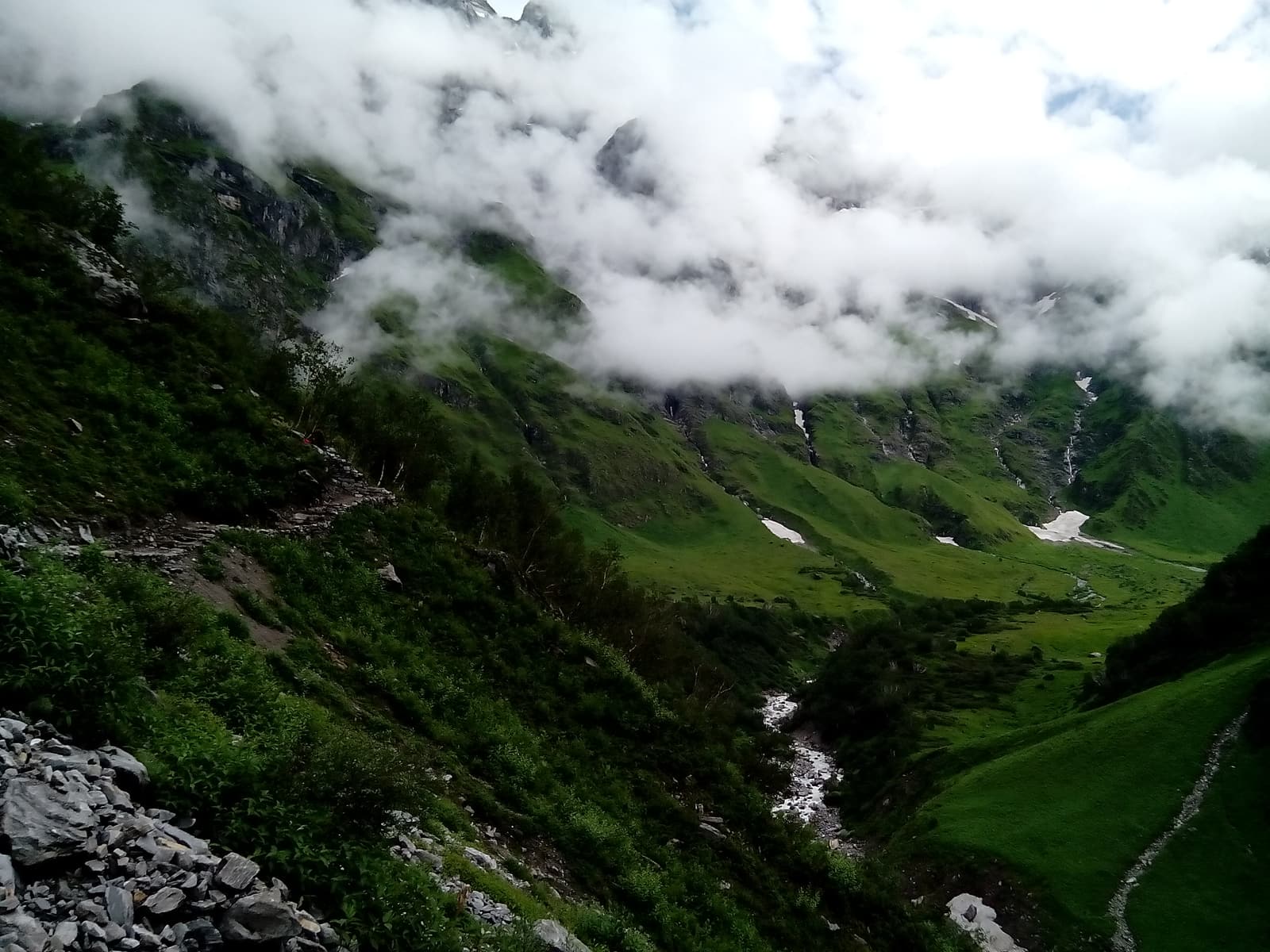
- On foot from Pulna: about 9–10 km and roughly 1,000 metres of ascent on a well-made stone path, usually four to six hours. The trail follows the Lakshman Ganga, passes Bhyundar village around halfway and steepens for the final three kilometres.
- By mule or porter: available at Pulna and Govindghat for riders and for luggage. Porters also carry children and less mobile visitors in baskets or chairs.
- By helicopter: a shuttle normally flies between Govindghat and Ghangaria in the season, taking only a few minutes. It is strictly weather-dependent and often grounded by monsoon cloud, so never rely on it for a tight connection.
Practical tips
- Carry enough cash for your whole stay. There is no ATM in Ghangaria or Govindghat, and card payments are rarely accepted.
- Rooms are basic everywhere: expect limited electricity, hot water by the bucket and damp bedding in the rainy weeks. A sleeping-bag liner and a dry set of clothes for the evening make a big difference.
- Mobile coverage is patchy — some networks get a weak signal in the village, and there is none in the valley or on most of the Hemkund trail. Tell family you will be out of touch.
- In late July and August, and around Sikh holidays, beds fill up. Book ahead or arrive by early afternoon.
- Leave heavy luggage in Joshimath or Govindghat and bring only what you need for three days.
Best treks & tours for Ghangaria
These packages are the easiest way to see Ghangaria with a guide, transport and lodging sorted:
 Private guided trek from US$498
Rishikesh: 5-Day Valley of Flowers Trek with Private Guide
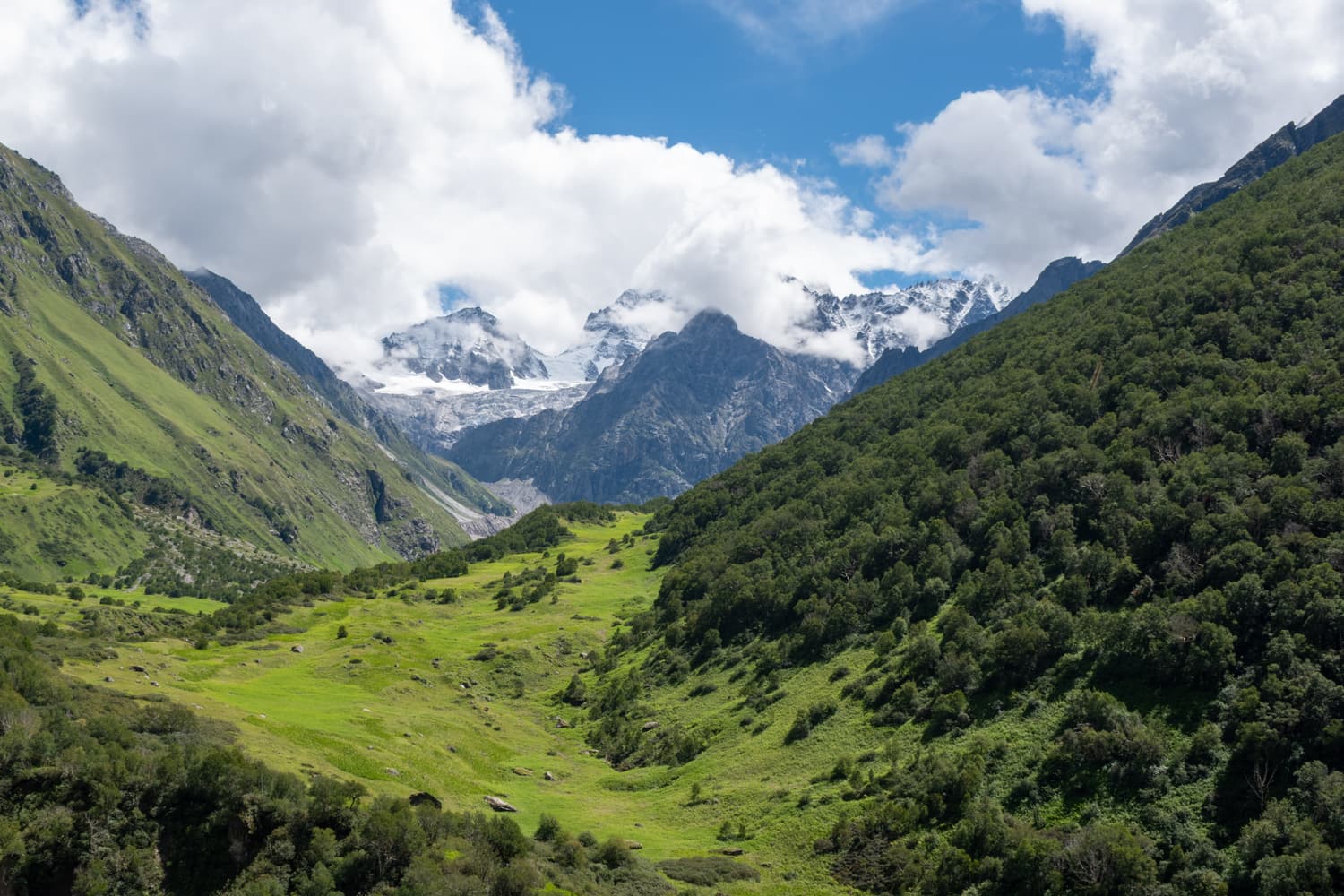
The most complete Valley of Flowers package we found on GetYourGuide: five days from Rishikesh with a private guide, the drive up the pilgrim highway, the walk in to Ghangaria and a day among the flowers. The listing is new and has no reviews yet, so read the day-by-day plan and what is included before you book.
- The drive up the Alaknanda past Devprayag and Joshimath
- Trek from Govindghat to Ghangaria with a private guide
- A full day inside the Valley of Flowers National Park
 Guided tour from US$621
Haridwar: Valley of Flowers, Uttarakhand Guided 3-Day Tour
A sister product to the three-day Haridwar tour, listed separately on GetYourGuide at a slightly different price. Compare the inclusions of the two side by side — hotel category, meals and whether mule or helicopter costs are covered — and pick the one that fits. No reviews yet.
- A second three-day departure from Haridwar
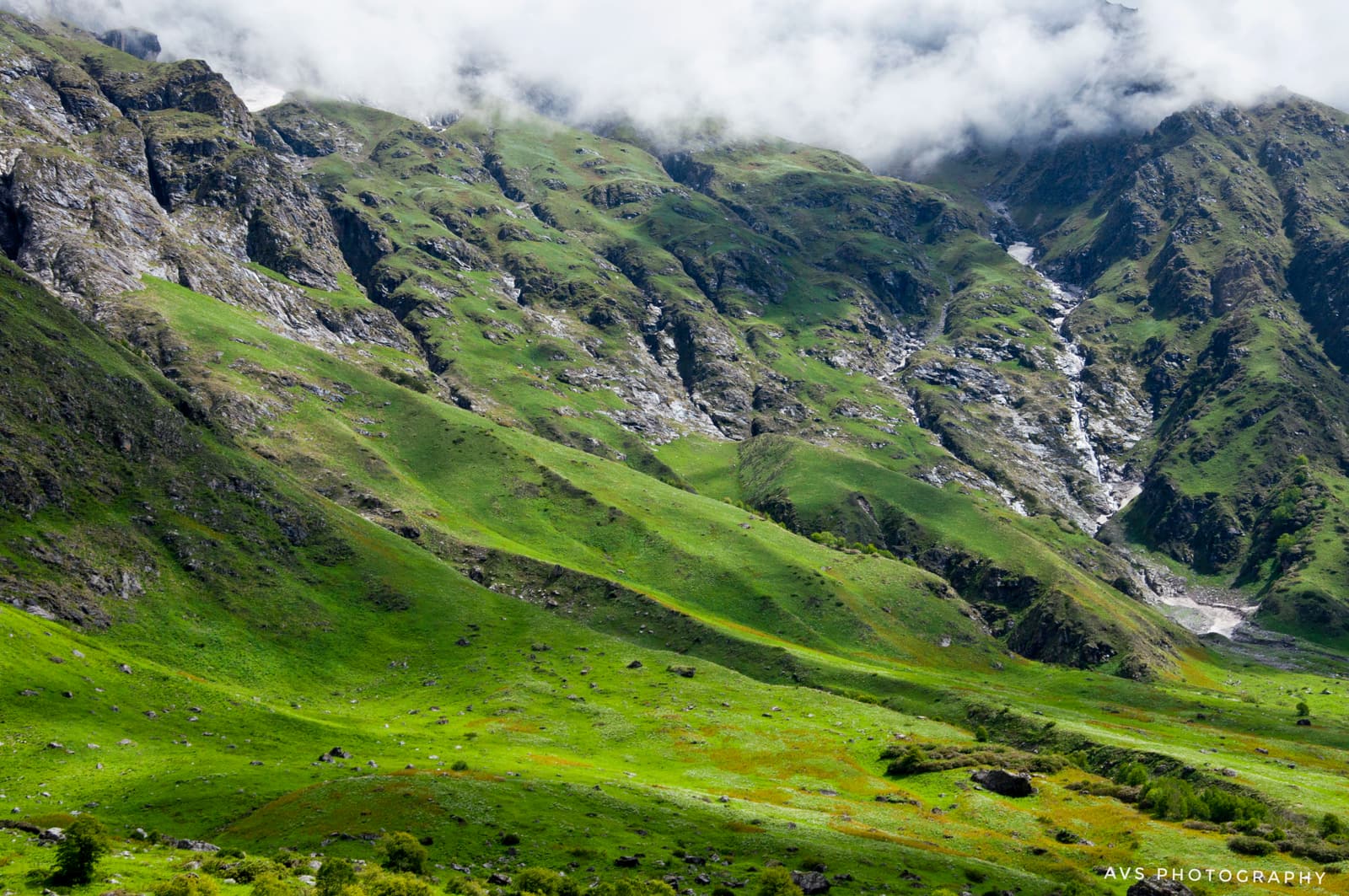
- Alpine meadows, wildflowers and Himalayan scenery
- Guide and transport arranged for you
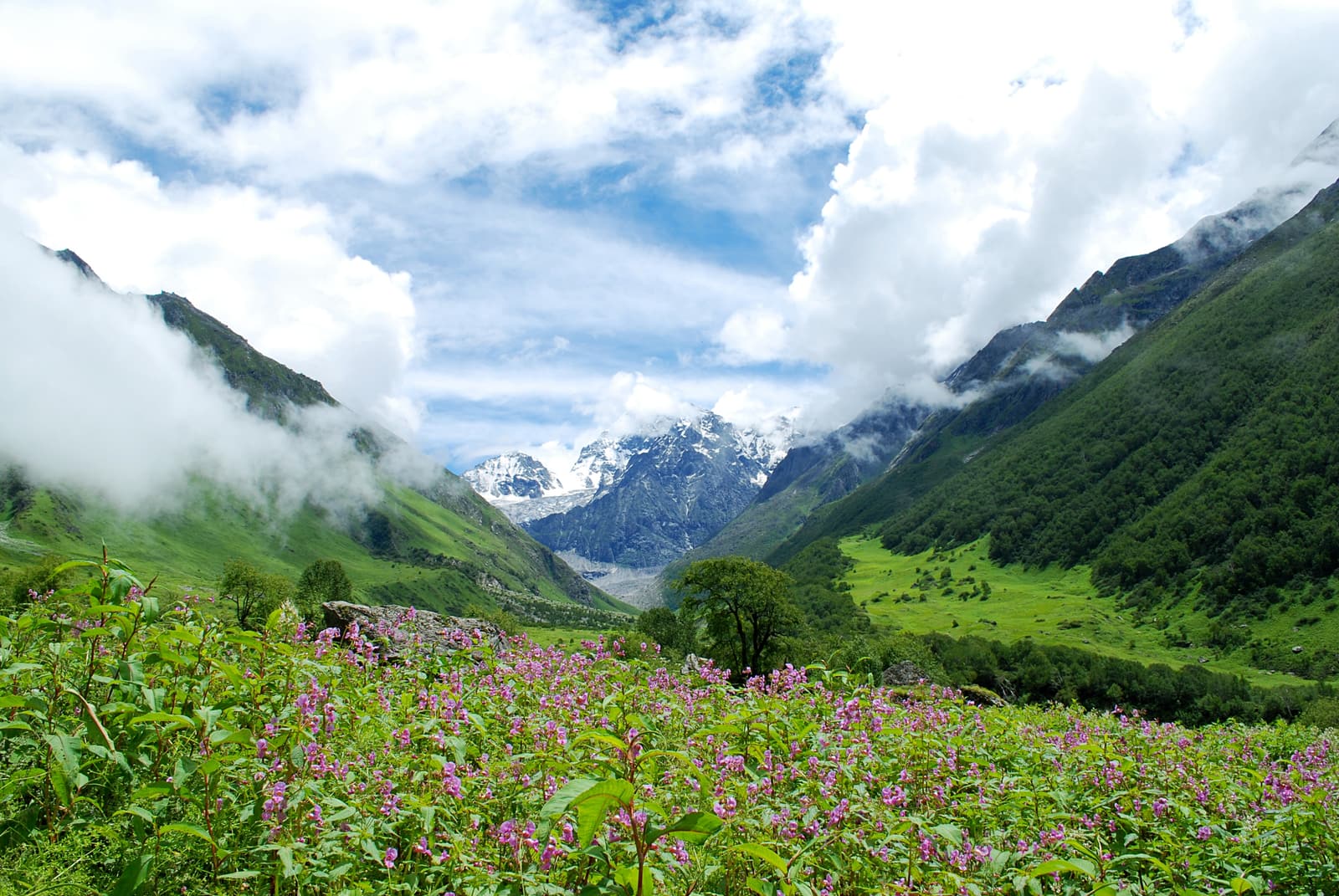 Guided tour from US$590
Haridwar: Valley of Flowers Guided 3-Day Tour
A fast guided trip from Haridwar that follows the classic road to Govindghat and on to the valley. Three days is a very tight schedule for a route that involves around ten hours of driving each way plus the trek, so check the itinerary carefully and keep a spare day in hand. No reviews yet.
- Pick-up in Haridwar, convenient for the railway station
- The road via Rishikesh, Devprayag, Rudraprayag and Joshimath to Govindghat
- A guided visit to the Valley of Flowers